Blog

Discover 4 Rare Primate Species in Phú Quốc National Park

Discover 4 Rare Primate Species in Phú Quốc National Park

Phú Quốc National Park is renowned not only for its dense primary rainforests stretching to the shoreline, but also as a sanctuary for rare wildlife. Among these, the order Primates plays a vital role in maintaining the island’s tropical forest ecosystem. Join Hornbill Adventures as we highlight 4 iconic primate species you may encounter during our guided jungle treks and night herping explorations across Phú Quốc.

4 Rare Primate Species in Phu Quoc

1. Bengal Slow Loris (Nycticebus bengalensis)

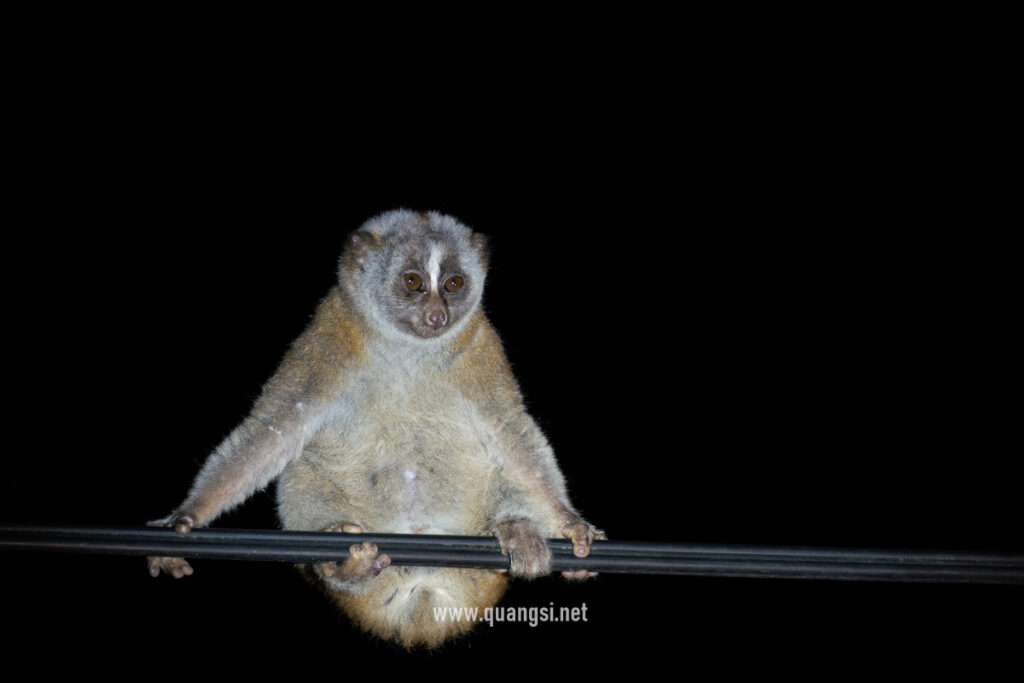
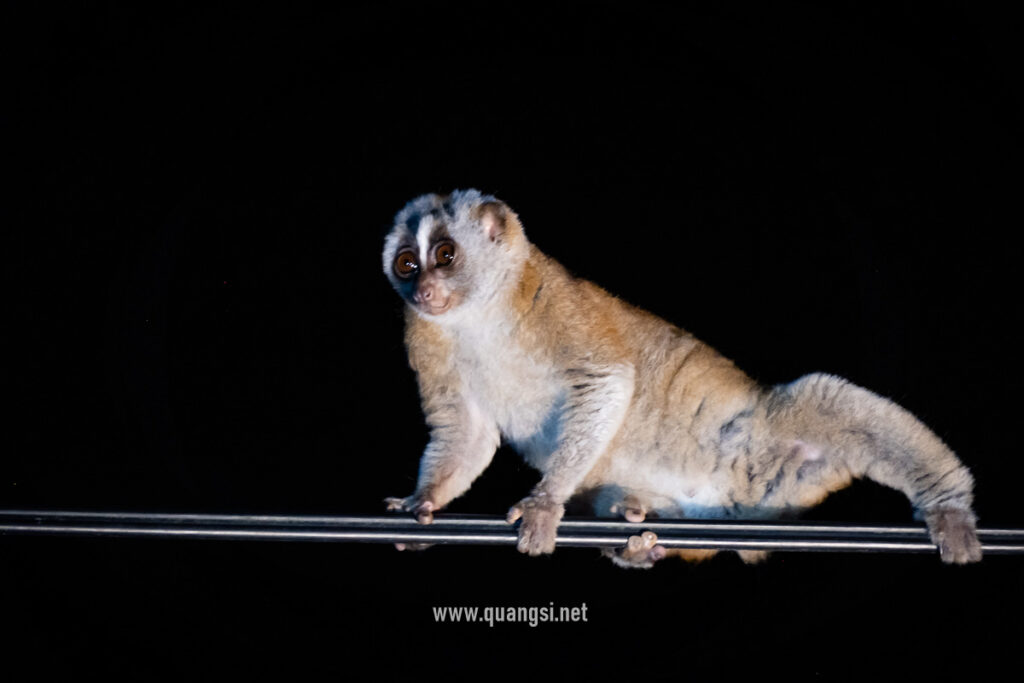
The Bengal Slow Loris is the largest nocturnal primate found in Vietnam. Adapted with large, round reflective eyes for night vision, these solitary arboreal creatures move deliberately through the canopy searching for insects, tree gum, and wild fruits.


A Bengal Slow Loris Nycticebus bengalensis crawling along a wire cable at night in Phu Quoc National Park
A Bengal Slow Loris Nycticebus

2. Pygmy Slow Loris (Nycticebus pygmaeus)

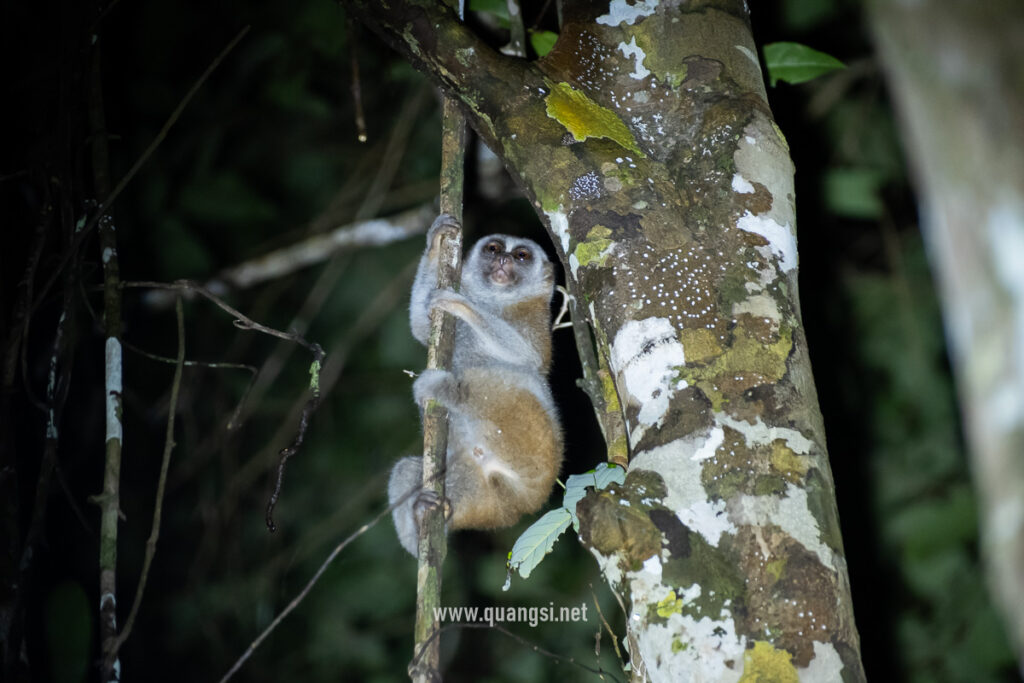
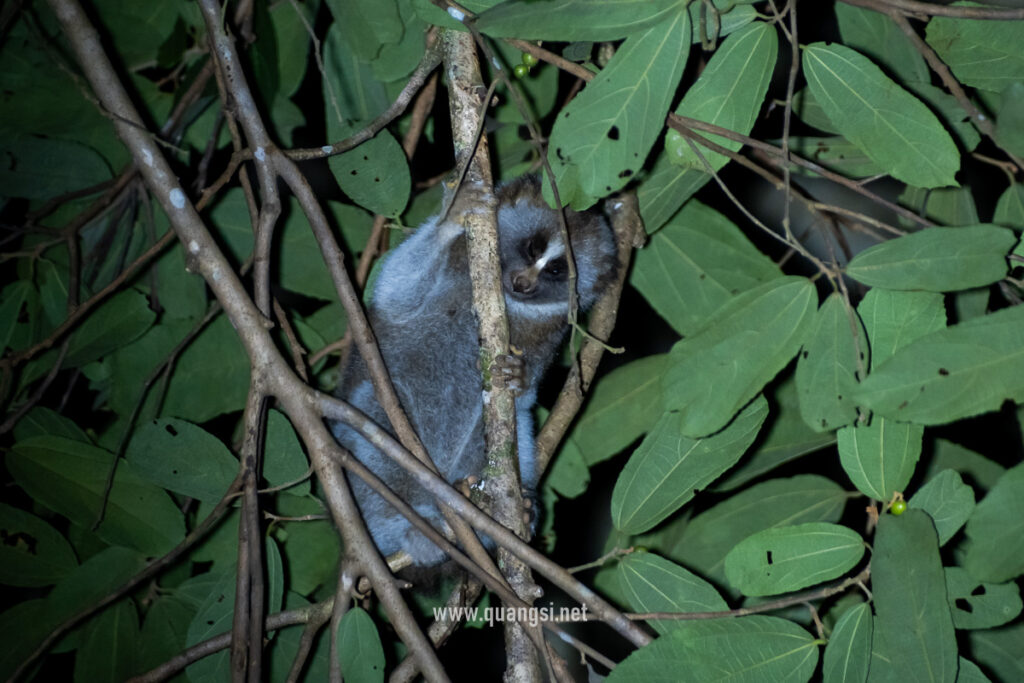
Distinctly smaller than its Bengal relative, the Pygmy Slow Loris features a soft reddish-orange coat. This sensitive, endangered species requires strict conservation efforts. They spend daylight hours curled up in tree hollows before emerging after dusk to forage.

  • Status: Both species are listed as Endangered (Pygmy Slow Loris is often considered Vulnerable to Endangered depending on regional assessments, while international trade is strictly prohibited under CITES Appendix I).

  • Threats: Slow lorises are heavily targeted by the illegal pet trade and traditional medicine markets due to misconceptions about their medicinal value. Night tours without ethical guidelines, flash photography, and habitat loss further disrupt their fragile nocturnal behaviors.

An endangered Pygmy Slow Loris Nycticebus pygmaeus clinging to a thin vine on a tree trunk at night
Pygmy Slow Loris Nycticebus pygmaeus

3. Indochinese Silvered Langur (Trachypithecus germaini)

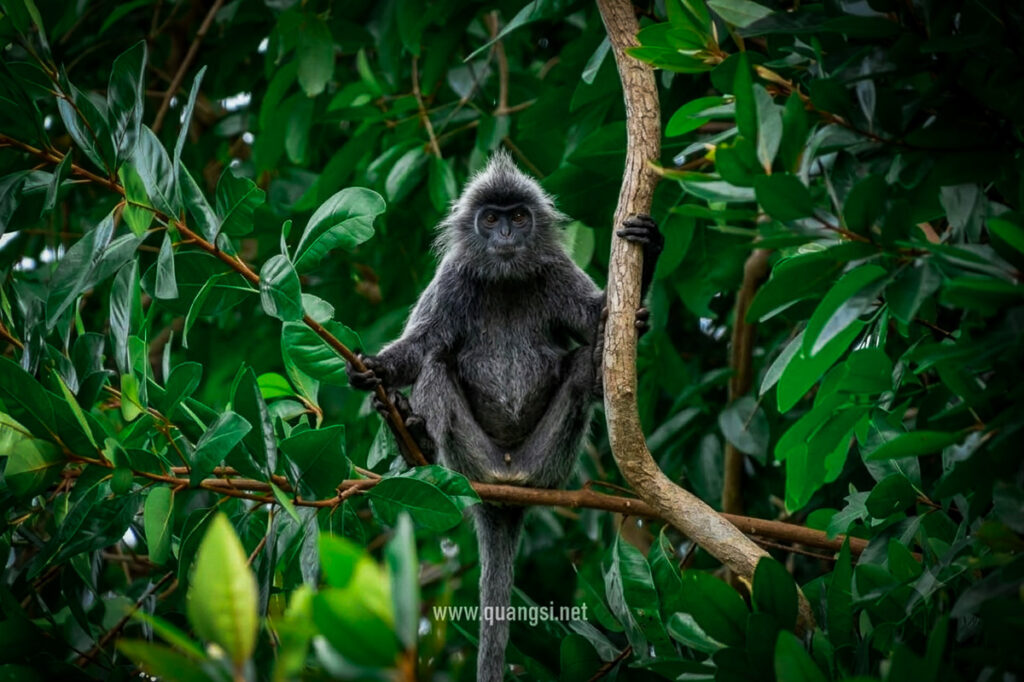
The Indochinese Silvered Langur is Phú Quốc’s primary folivorous (leaf-eating) primate. Recognizable by its silvery-grey coat and prominent crest of head hair, this species inhabits high forest canopies near streams and coastal areas, remaining shy and elusive around humans.

  • Status: Listed as Endangered on the IUCN Red List.

  • Threats: As strict leaf-eaters (folivores), they rely heavily on healthy, uninterrupted primary and secondary forests. Forest fragmentation caused by infrastructure and road expansions isolates populations, limiting their foraging range and genetic diversity.

An Indochinese Silvered Langur Trachypithecus germaini sitting on a tree branch in the Phu Quoc rainforest canopy
An Indochinese Silvered Langur

4. Long-tailed Macaque (Macaca fascicularis)

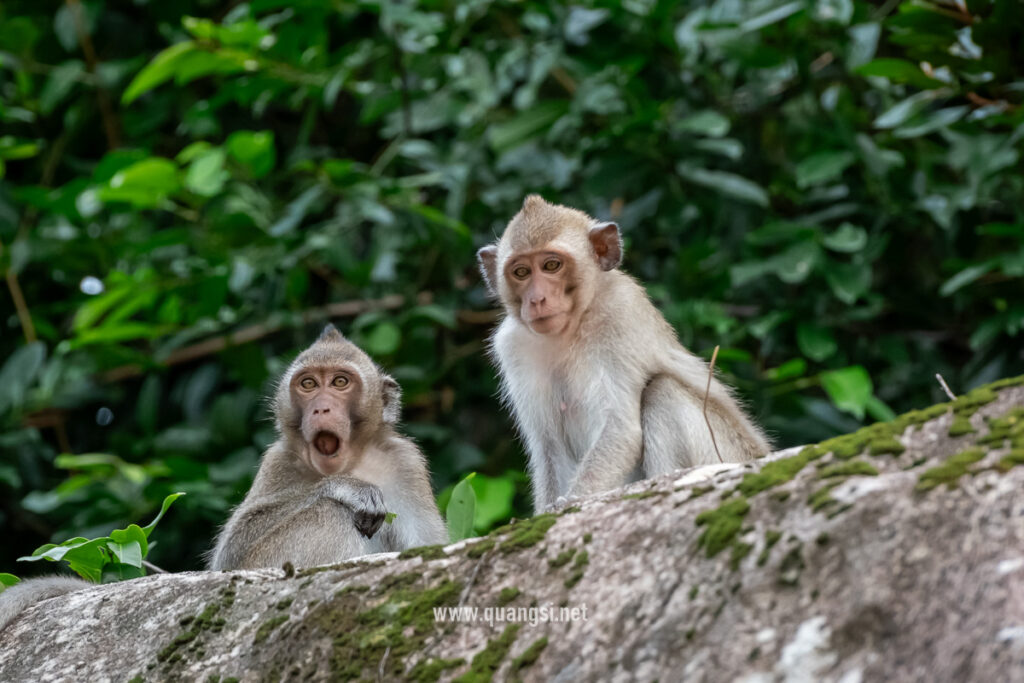
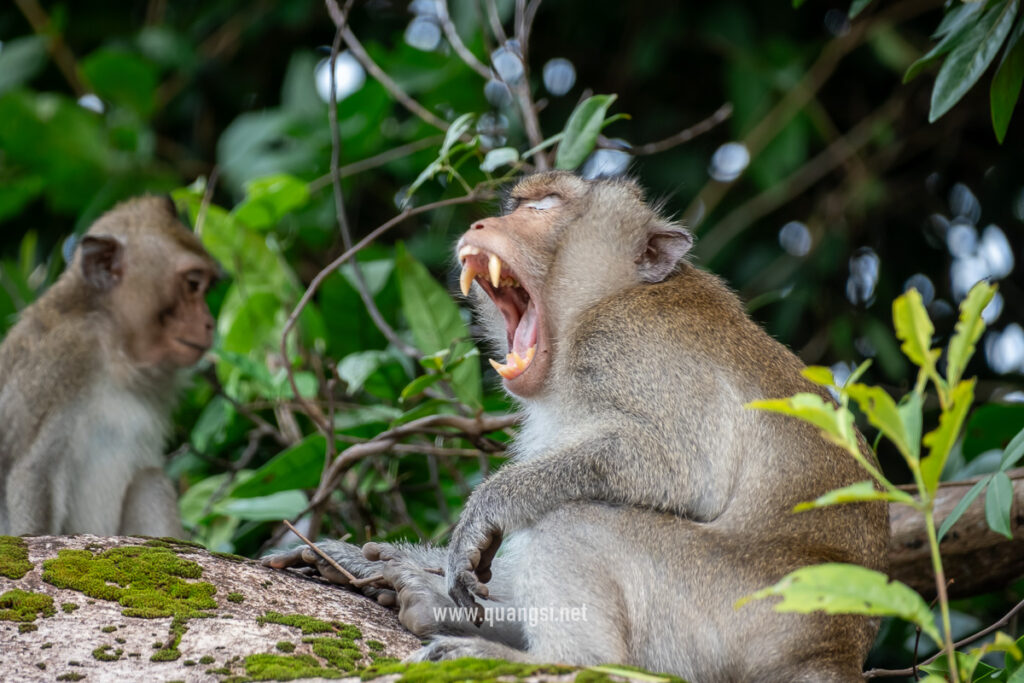
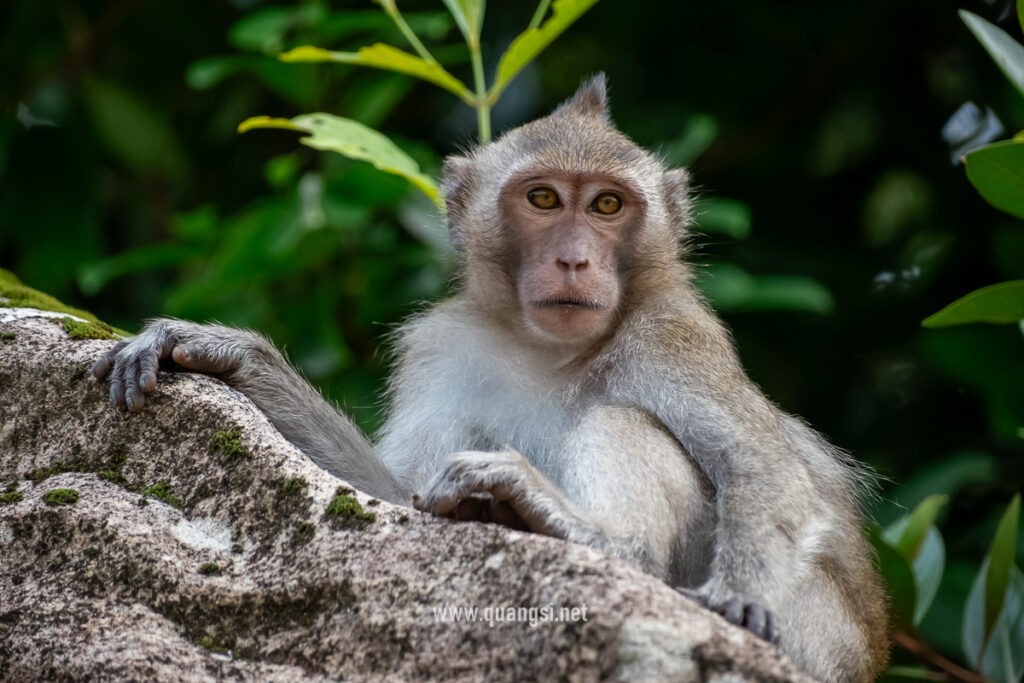
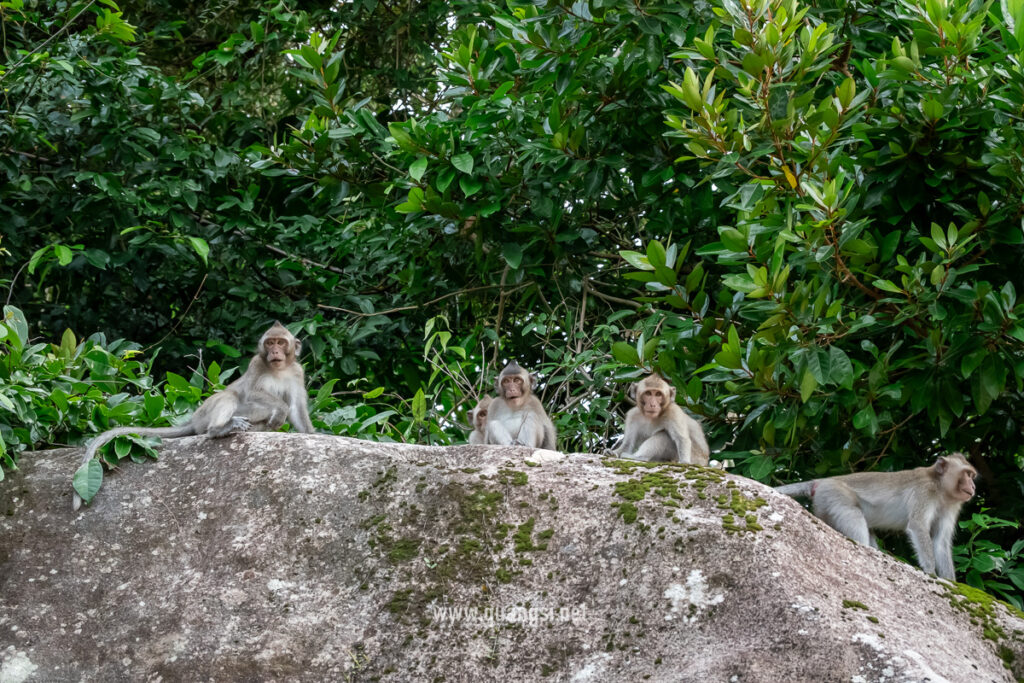
The Long-tailed Macaque is the most frequently observed primate in Phú Quốc, inhabiting coastal mangroves, forest fringes, and interior woodlands. Highly social, intelligent, and adaptable, their tails often equal or exceed their body length, providing balance high in the treetops.

  • Status: Listed as Vulnerable globally due to over-harvesting for biomedical research, the illegal pet trade, and human-wildlife conflicts (such as habituation from being fed by tourists).

  • Threats: Although they are the most adaptable and commonly seen primates on the island, artificial feeding changes their natural foraging behavior, exposes them to human diseases, and often leads to dangerous road accidents or conflicts with local settlements.

Two young Long-tailed Macaques sitting together on a boulder in Phu Quoc National Park
Long-tailed Macaques

How We Can Help Protect Them

Protecting Phú Quốc’s endemic and wild primates requires a collective effort from local tour operators, travelers, and conservationists. Here is how you can contribute:

  • Practice Ethical Wildlife Tourism: Never support illegal wildlife cafes, roadside photo props, or vendors selling captive slow lorises and monkeys. Choose responsible local operators like Hornbill Adventures that strictly adhere to Leave No Trace ethics, maintain safe observation distances, and prohibit invasive flash photography during night herping tours.

  • Support Local Habitats & Conservation Research: Back initiatives that fund wildlife corridors, reforestation projects, and biological field surveys in Phú Quốc National Park. Responsible ecotourism directly contributes to local conservation funding and incentivizes habitat preservation.

  • Stop Feeding Wild Macaques: Resist the urge to feed Long-tailed Macaques along roadsides or viewpoints. Feeding disrupts their natural diet, increases aggression, and removes their fear of humans—which often results in them being relocated or culled as pests.

  • Spread Awareness: Share accurate scientific information and conservation messages through platforms like quangsi.net. Educating fellow travelers about the true vulnerability of animals like the Pygmy Slow Loris helps dismantle the demand for the illegal pet trade.

  • Report Illegal Wildlife Trade: If you witness wildlife trafficking, captive protected species, or illegal bushmeat trading while traveling in Phú Quốc, report it immediately to local forestry protection authorities (Kiểm Lâm) or ethical conservation NGOs operating in Vietnam.
A adult Long-tailed Macaque yawning widely showing sharp teeth in the wild at Phu Quoc
A adult Long-tailed Macaque
A Long-tailed Macaque Macaca fascicularis resting on a mossy rock in Phu Quoc National Park
A Long-tailed Macaque
pygmy slow loris
A Pygmy Slow Loris
A chubby Bengal Slow Loris balancing firmly on a nocturnal utility cable in Phu Quoc
A chubby Bengal Slow Loris

Login

Join us on a trekking tour to explore the hidden gems of Phu Quoc National Park, where you can encounter rare wildlife, admire stunning waterfalls, and enjoy the fresh air. You will also visit Rach Vem, a charming fishing village, where you can interact with the locals and taste their delicious seafood. Don’t miss this chance to discover the wild beauty of Phu Quoc island with us!

Address

127 Tran Hung Dao, Phu Quoc, Kien Giang, Vietnam.

Phone

+840969159597

Email

quangsi.net@gmail.com