8 Hours To Conquer Ham Rong Mountain a Trek Not For Everyone
Table of Contents

Hidden in the northwest of Phu Quoc, an area famous for its pristine beaches, powdery white sand, and vibrant starfish, lies a true challenge for adventure seekers — Ham Rong Mountain Range.
From afar, the mountain stretches like a dragon reaching out toward the sea, almost touching the border of Cambodia. Its highest peak rises to approximately 355–365 meters above sea level. While the elevation may not seem extreme, the real challenge lies in the terrain and accessibility.
This is not a typical tourist hike — it is a true expedition into the wild.

Important Notice Before You Read
- This article is not a trekking guide.
- The area is currently under the management of Phu Quoc National Park and is not open to tourists at the moment.
- This is purely a personal experience shared for reference, offering insight into the terrain and difficulty level of this remote area.
A Journey Through Five Unique Ecosystems
One of the most fascinating aspects of this trek is the diversity of landscapes. As you ascend, you pass through multiple distinct ecosystems, each with its own challenges:
- Coastal secondary forest – low vegetation, high heat, and humidity
- Shrubland (thorny bush habitat) – dense and difficult to navigate
- Rocky mountain forest – steep slopes and slippery surfaces
- Evergreen forest with dipterocarp trees – tall canopy, low light
- Grassland and sim (wild myrtle) fields – open but overgrown
The constant change in terrain makes the trek physically demanding and mentally challenging, especially when it comes to navigation.
Overview
- Distance: ~4 km (depending on route)
- Elevation: ~355 m
- Total duration: ~8 hours (round trip)
- Difficulty: Very high (advanced level)
- Terrain: Steep, rocky, dense vegetation, no clear trail
The Real Challenge:
Finding the Way
Our group consisted of three people, and we frequently had to split up to scout for the most feasible route. Although previous climbers had placed a summit marker, the trail has:
- Almost completely disappeared
- Been overgrown by dense vegetation
- Lost visibility due to tall trees
- Experienced signal loss and interference (especially near Cambodia)
- Without experience in jungle navigation, reaching the summit would be extremely difficult.
Climate & Terrain – The Silent Struggle
Beyond the terrain, the tropical conditions add another layer of difficulty:
- High temperatures
- Extreme humidity
- Minimal airflow
- Rapid dehydration
Certain rocky sections also pose serious slipping hazards, especially without proper gear such as:
- Gloves
- Trekking shoes
- Protective equipment
This is a trail that can quickly become dangerous if underestimated.
Signs of the Forest – and Concern
During our trek at the end of the dry season, we observed:
- Very limited wildlife sightings
- More than 30 animal traps left behind by poachers
- Evidence of illegal logging activity
The only notable wildlife presence was the distant call of a hornbill, echoing through the forest — a reminder that this ecosystem still holds ecological value.
The Reward:
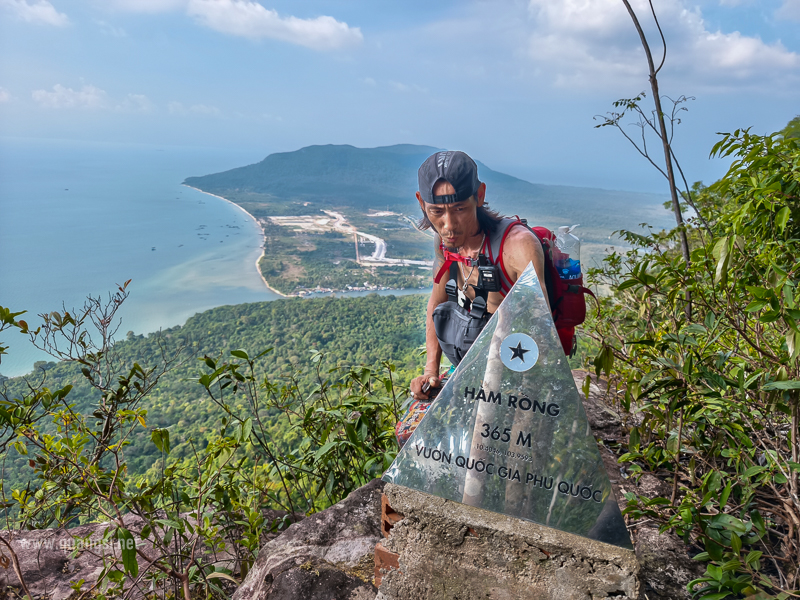
A Panoramic Summit View
After hours of trekking, the summit offers a truly rewarding view:
- A glimpse of mainland Cambodia
- Rach Tram fishing village
- Melaleuca forests and resettlement areas
- Endless ocean stretching to the horizon
- While the exact summit point may vary slightly, the panoramic view is unforgettable.
Overall Assessment
This trek is:
- Not suitable for beginners
- Not for mass tourism
- Ideal for experienced trekkers and explorers
If opened in the future, it would require:
- Professional guides
- Clearly marked trails
- Proper safety management
Final Thoughts
Ham Rong Mountain is not a place for casual check-ins —it is a place to test your limits. It remains one of the few truly wild and untouched trekking routes in Phu Quoc. But that raw beauty comes with real challenges and risks. If you are passionate about nature, respect this place and wait until it is responsibly developed for safe exploration.
Trek logs and real photos are shared at the end of this article.


Tracklog: Click