Meet One of Vietnam’s Rarest Venomous Snakes Trimeresurus honsonensis Hidden within the lush tropical forests of Hon Son…
Meet One of Vietnam's Rarest Venomous Snakes Trimeresurus honsonensis
Hidden within the lush tropical forests of Hon Son Island, off the southwest coast of Vietnam, lives one of the country’s most remarkable reptiles—the Hon Son Pit Viper (Trimeresurus honsonensis).
This striking green pit viper is endemic to Hon Son Island, meaning it is found naturally nowhere else on Earth. For herpetologists, wildlife photographers, and reptile enthusiasts, it represents one of Vietnam’s most exciting endemic snake species and a true highlight of any herping expedition.
Although several green pit vipers occur throughout Southeast Asia, Trimeresurus honsonensis is genetically distinct and has evolved in isolation on Hon Son Island over thousands of years. Its discovery highlights the island’s exceptional biodiversity and the importance of conserving its remaining tropical forests.
Scientific Classification
- Scientific name: Trimeresurus honsonensis
- Family: Viperida
- Common name: Hon Son Pit Vipe
- Vietnamese name: Rắn lục Hòn Sơn, rắn lục mè.
- Distribution: Endemic to Hon Son Island, An Giang Province, Vietnam
Physical Appearance
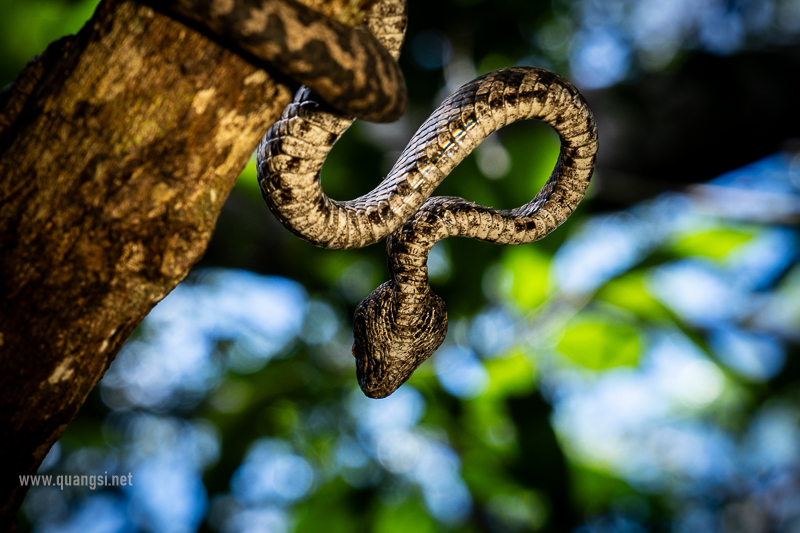
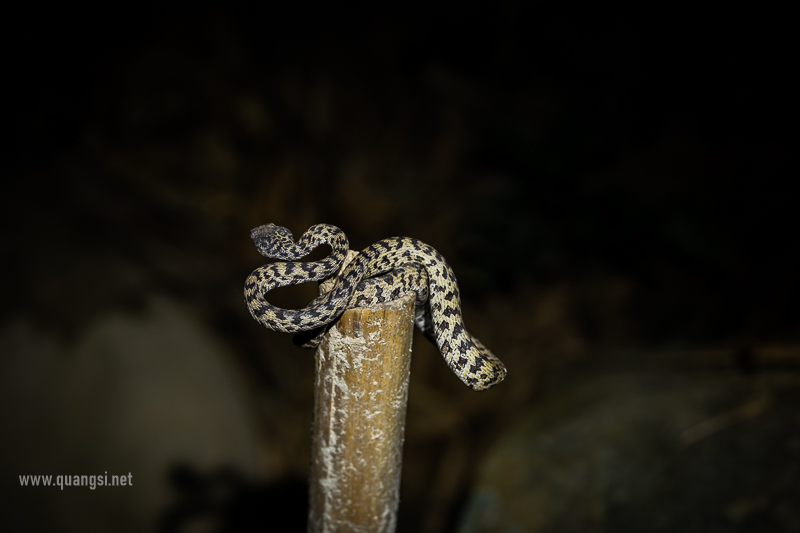
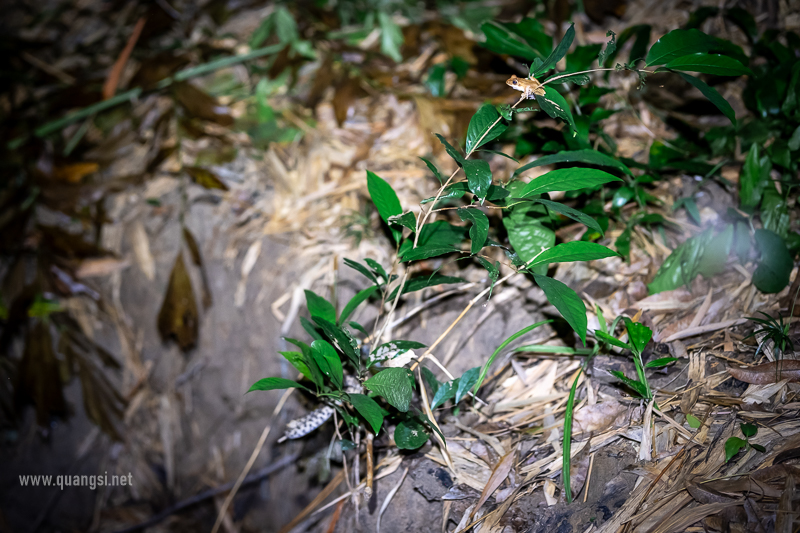
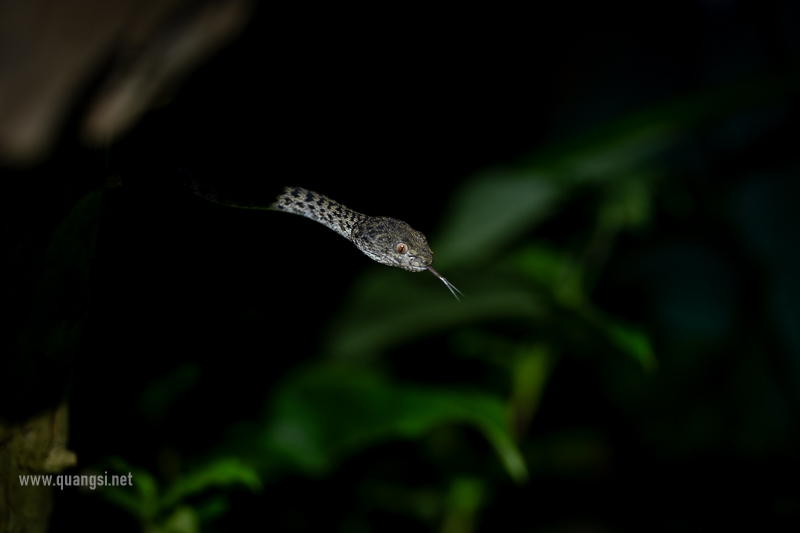
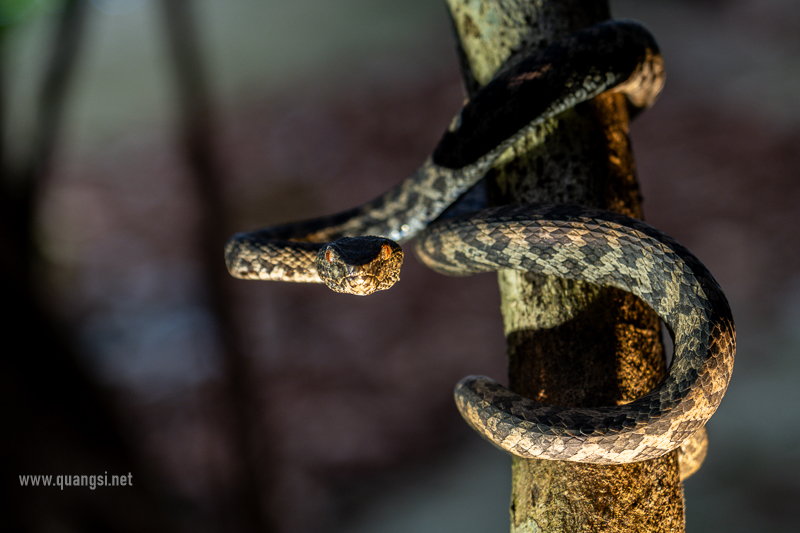
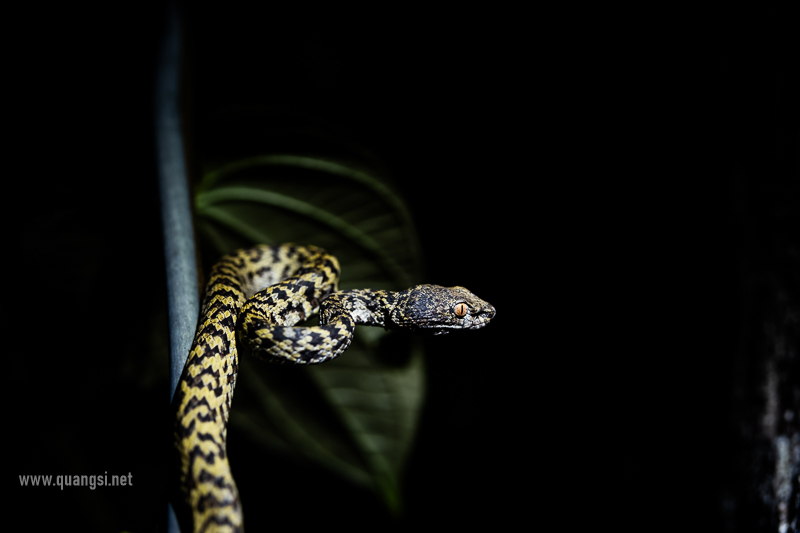
Like many members of the genus Trimeresurus, the Hon Son Pit Viper exhibits a grayish-brown to olive base color overlaid with irregular dark brown and black blotches. This cryptic pattern provides outstanding camouflage among leaf litter, bamboo debris, rocks, and moss-covered forest floors, allowing the snake to remain nearly invisible during both day and night.
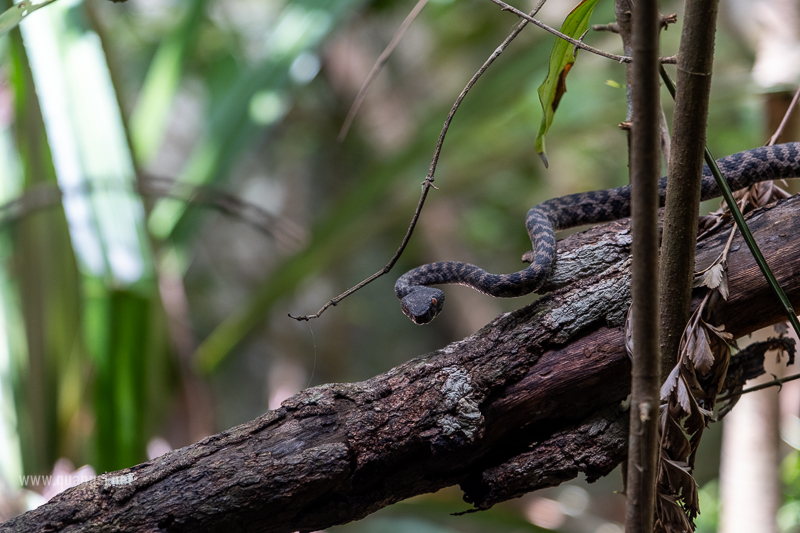
The head is broad and distinctly triangular, a characteristic feature of vipers. Its scales appear strongly keeled, giving the skin a rough, matte texture that further enhances camouflage. Between the eyes and nostrils are the heat-sensitive loreal pits, specialized organs capable of detecting infrared radiation from warm-blooded prey.
One of its most striking features is its golden-yellow iris with a vertical slit pupil, perfectly adapted for nocturnal hunting. The eyes stand out beautifully against the darker head markings, giving the snake an alert and penetrating appearance.
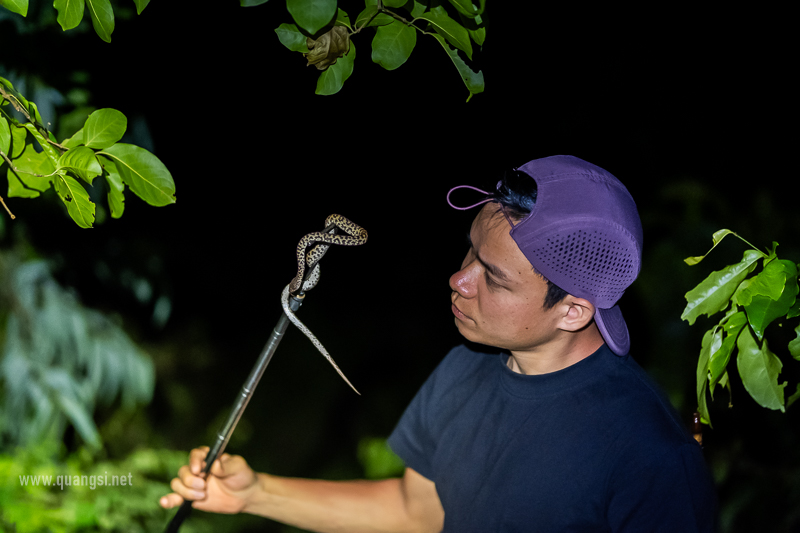
Adults typically reach 60–80 cm (24–31 inches) in total length, although larger individuals may occasionally be encountered.
An Expert of Camouflage
The Hon Son Pit Viper is a master of concealment.
During daylight hours, it often remains perfectly motionless among dense vegetation, where its body blends seamlessly with surrounding leaves. Even experienced herpers may walk within a meter of the snake without noticing it.
This remarkable camouflage is its primary defense against predators and an effective hunting strategy for ambushing unsuspecting prey.
For wildlife photographers, spotting one before it notices you is one of the most rewarding challenges in tropical herping.
Habitat
Trimeresurus honsonensis inhabits the humid evergreen forests covering Hon Son Island.
It is most commonly observed:
- Along small forest streams
- On shrubs beside hiking trails
- In dense understory vegetation
- Near rocky hillsides with high humidity
- Around moss-covered branches after rainfall
Behavior
The Hon Son Pit Viper is primarily nocturnal.
As temperatures cool after sunset, it begins searching for prey while remaining almost invisible among vegetation.
Its behavior is characterized by:
Slow, deliberate movement
Ambush hunting
Excellent climbing ability
Long periods of complete stillness
Strong reliance on camouflage
Rather than actively chasing prey, it patiently waits until a suitable animal approaches within striking distance.
Diet
Like other Asian green pit vipers, Trimeresurus honsonensis is an opportunistic predator.
Its diet likely includes:
- Tree frogs
- Small lizards
- Geckos
- Small birds
- Rodents
Using specialized heat-sensitive facial pits, the snake can detect warm-blooded prey even in complete darkness.
Once prey is within range, it delivers a rapid venomous bite before releasing the animal and tracking it until the venom takes effect.
Venom
The Hon Son Pit Viper possesses hemotoxic venom, similar to many other green pit vipers.
Its venom primarily affects: Blood clotting, Soft tissues, Local circulation
Symptoms following a bite may include: Immediate pain, Swelling, Bruising, Bleeding, Tissue damage
Although bites are considered medically significant and require prompt hospital treatment, this species is not aggressive toward humans.
Nearly all bites occur when individuals attempt to handle, disturb, or accidentally step on the snake.
The best safety practice is simple:
Observe, photograph, and keep a respectful distance.
Reproduction
Very little is currently known about the reproductive biology of Trimeresurus honsonensis.
Like many pit vipers in Southeast Asia, it is believed to be viviparous, giving birth to live young rather than laying eggs.
Conservation Status
Because Trimeresurus honsonensis occupies only a single small island, its long-term survival depends heavily on the preservation of Hon Son’s forests.
Potential threats include: Habitat loss, Road development, Illegal wildlife collection, Human persecution, Expanding tourism, Forest fires, farmland…
Although the species has not yet received a formal global conservation assessment, its restricted distribution makes habitat protection particularly important.
Every remaining hectare of forest on Hon Son contributes to the survival of this remarkable snake.
Why Is It So Special?
Among Vietnam’s more than 250 snake species, only a handful are true island endemics.
The Hon Son Pit Viper represents millions of years of isolated evolution and serves as an important symbol of the island’s unique biodiversity.
For wildlife enthusiasts, encountering this snake in its natural habitat is far more meaningful than seeing one in captivity.
Watching it rest quietly among rainforest leaves reminds us that the world’s most extraordinary wildlife often exists in places few people ever visit.
Observing the Hon Son Pit Viper Responsibly
The best way to appreciate Trimeresurus honsonensis is through ethical wildlife observation.
Always remember:
- Never attempt to touch or handle the snake.
- Keep a safe viewing distance.
- Avoid using excessive flash photography.
- Stay on established forest paths whenever possible.
- Respect the animal’s natural behavior.
- Leave the habitat exactly as you found it.
Responsible herping not only protects wildlife but also ensures that future visitors can enjoy the same unforgettable experience.
The Hon Son Pit Viper is more than just a venomous snake—it is one of Vietnam’s rarest endemic reptiles and a living reminder of the extraordinary biodiversity hidden within the tropical forests of Hon Son Island.
More article about Hon Son Pit viper:
Herping in Hon Son Island Vietnam
Herping in Hon Son Island Vietnam – Discover Endemic Reptiles in One of Vietnam’s Hidden Wildlife Paradises Table…
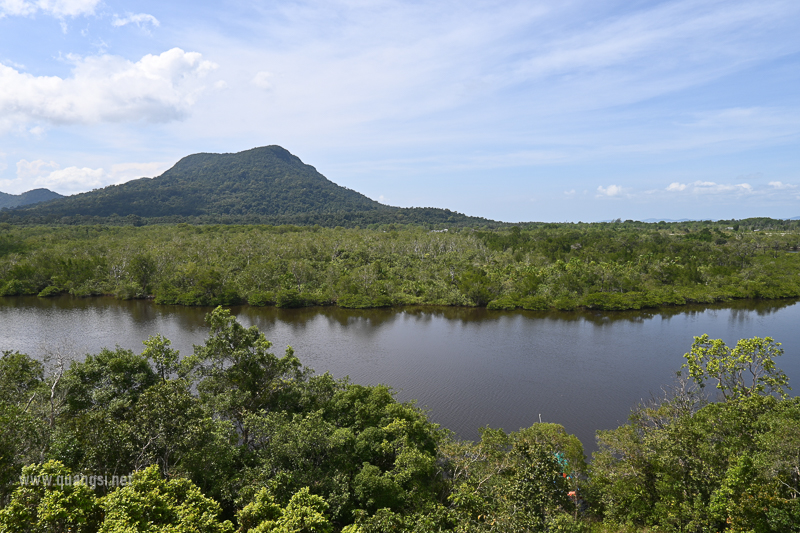
Discover the Untouched Beauty of Rach Tram – A Hidden Gem of Phu Quoc National Park
Discover the Untouched Beauty of Rach Tram – A Hidden Gem of Phu Quoc National Park When people…