The Ultimate List of Snake Species on Phu Quoc Island
THE ULTIMATE LIST OF SNAKE SPECIES ON PHU QUOC ISLAND
Phu Quoc is not only famous for its beautiful beaches and tropical forests, but also for its rich biodiversity. Among the island’s reptiles, snakes play an important ecological role within Phu Quoc National Park.
Although many people fear snakes, most species found in Phu Quoc are shy and avoid human contact unless threatened. Below is a list of 31 snake species recorded on the island, including basic information about their venom, behavior, habitat, and conservation status.
Danger Level: Very high, Its mortality rate is 60–70% in untreated humans. The amount of venom injected is 5 mg, while the lethal dose for a 75kg human is 1 mg
Behavior: Nocturnal and shy
Distribution: Lowland forests and areas near villages, residential area
Conservation Status: Rare (LC)
8. Fowlea flavipunctata – Yellow-spotted Keelback
Vietnamese Name: Rắn nước đốm vàng.
Venom: Non-venomous
Danger Level: Low
Behavior: Aquatic species, Aggressive when threatened
Distribution: Ponds, streams, marshes, residential area
Conservation Status: Common (LC)
9. Psammodynastes pulverulentus – Mock Viper
Vietnamese Name: Hổ đất nâu
Venom: Mildly venomous
Danger Level: Harmless
Behavior: Mimics vipers when threatened
Distribution: Forest leaf litter
Conservation Status: Common (LC)
10. Pareas berdmorei – Slug-eating Snake
Vietnamese Name: Rắn ăn sên
Venom: Non-venomous
Danger Level: Harmless
Behavior: Specialized snail and slug feeder
Distribution: Moist forests and streamside habitats
Conservation Status: Rare (LC)
11. Oligodon macrurus – Kukri Snake
Vietnamese Name: Rắn Khiếm
Venom: Non-venomous
Danger Level: Low
Behavior: While they are non-venomous and generally harmless to humans, they are known to bite quickly and vigorously if handled. Their specialized teeth can cause deep, profuse bleeding because they act like surgical blades
Distribution: Lowland forests and areas near villages, residential area
Conservation Status: Rare (LC)
12. Gonyosoma oxycephalum – Red-tailed Green Ratsnake
Vietnamese Name: Lục chúa, thanh xà đuôi đỏ
Venom: Non-venomous
Danger Level: Low
Behavior: Arboreal and defensive when handled
Distribution: Primary forests, near stream
Conservation Status: Decreasing (LC)
13. Coelognathus radiatus – Copperhead Ratsnake
Vietnamese Name: Hổ Ngựa, sọc dưa
Venom: Non-venomous
Danger Level: Low
Behavior: Hunts rodents and lizards, Aggressive when threatened
Distribution: Farms and forests
Conservation Status: Rare (LC)
14. Naja kaouthia – Monocled Cobra
Vietnamese Name: Hổ đất, hổ mang một mắt kính
Venom: Highly venomous, The primary danger in cobra venom comes from neurotoxins that target the nervous system. By blocking the body’s nerve signals, these toxins cause severe muscle weakness (flaccid paralysis), which can result in fatal respiratory failure if left untreated
Danger Level: Very high,
Behavior: When disturbed, they prefer to flee. If threatened, they will raise their upper body, flare their hood, hiss loudly, and strike to defend themselves
Distribution: Grasslands and lowland forests
Conservation Status: Declining in the wild (VU)
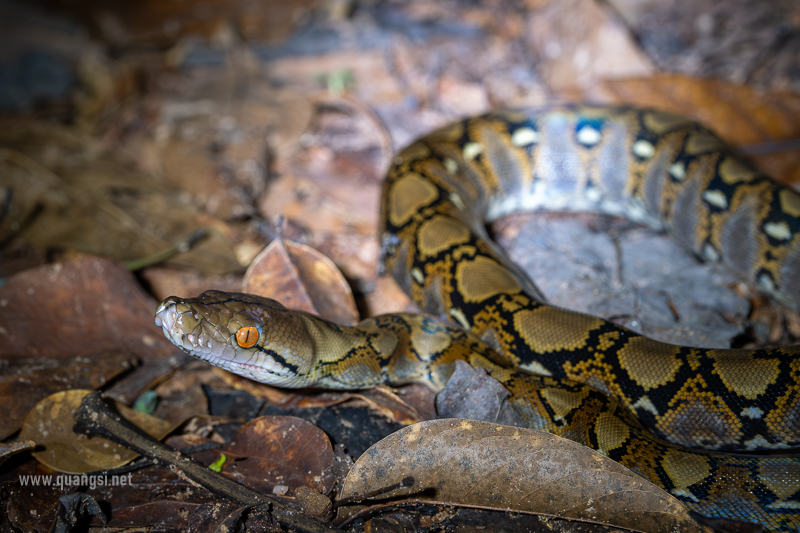
15. Malayopython reticulatus – Reticulated Python
Vietnamese Name: Trăn Gấm (con nưa theo truyền thuyết dân gian)
Venom: Non-venomous
Danger Level: High due to size
Behavior: Their activity is strongly linked to lunar phases; they are highly active during strong moonlight in dense forests
Distribution: Wetlands and forest streams, near villages, residential area
Conservation Status: Protected species (IIB)
16. Xenopeltis unicolor – Sunbeam Snake
Vietnamese Name: Rắn hổ hành
Venom: Non-venomous
Danger Level: Low, harmless
Behavior: These fossorial constrictors live underground. While they typically try to escape or vibrate their tails like rattlesnakes when threatened, they may bite if handled roughly
Distribution: Moist soil and primary rainforest
Conservation Status: Common (LC)
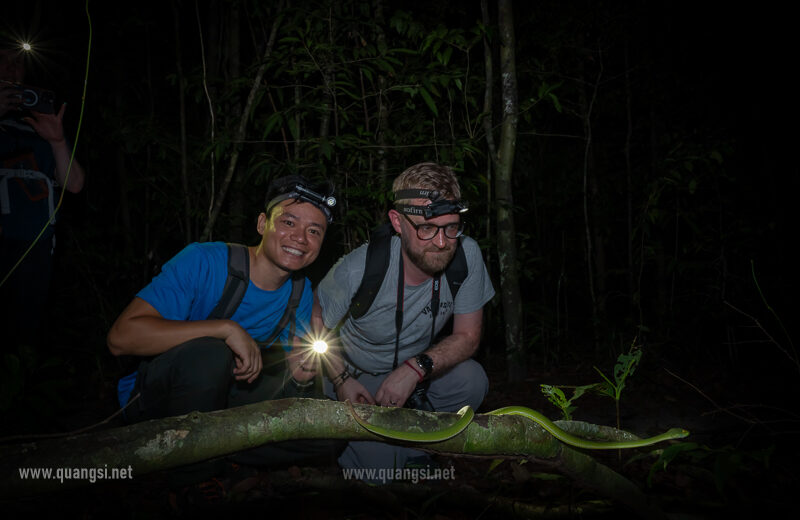
17. Boiga cyanea – Green Cat Snake
Vietnamese Name: Rào xanh, mắt mèo
Venom: Mildly venomous
Danger Level: Low, harmless
Behavior: Arboreal and nocturnal
Distribution: Primary forests
Conservation Status: Common (LC)
A Baby Green Cat Snake
An adult Green Cat Snake
18. Bungarus fasciatus – Banded Krait
Vietnamese Name: Cạp Nông, Mai gầm
Venom: Extremely neurotoxic, The untreated mortality rate is only 1–10%, largely because human contact is rare and defensive bites seldom result in envenomation.
Danger Level: Very high
Behavior: Banded kraits are shy, nocturnal, and rarely seen. While they typically hide their heads rather than bite when harassed during the day, they become much more active and dangerous at night.
Distribution: Human settlements and secondary forests
Conservation Status: Rare (LC)
21. Lycodon davisonii – Bridle Snake
Vietnamese Name: Rắn Dẻ
Venom: Non-venomous
Danger Level: Low, harmless
Behavior: Secretive and nocturnal
Distribution: Humid forests
Conservation Status: Rare (LC)
22. Calliophis maculiceps – Speckled Coral Snake
Vietnamese Name: Lá khô đốm
Venom: Highly venomous
Danger Level: High, human fatalities from its bite have been recorded.
Behavior: Fossorial and secretive
Distribution: Forest leaf litter
Conservation Status: Rare (LC)
23. Rhabdophis siamensis – Red-necked Keelback
Vietnamese Name: Hoa cỏ cổ đỏ, hổ lửa
Venom: Potent rear-fanged venom
Danger Level: Moderate to high, human fatalities from its bite have been recorded.
Behavior: Defensive and often near water
Distribution: Rice fields and streams
Conservation Status: Rare (LC)
24. Cylindrophis ruffus – Red-tailed Pipe Snake
Vietnamese Name: Rắn trun
Venom: Non-venomous
Danger Level: Low
Behavior: Burrowing species
Distribution: Soft and moist soils
Conservation Status: Uncommon (LC)
"Reference photo sourced online"
25. Ophiophagus hannah – King Cobra
Vietnamese Name: Rắn hổ chúa, hổ mây
Venom: Extremely venomous
Danger Level: Very high
Behavior: Feeds primarily on other snakes, The king cobra is generally unaggressive and avoids humans. However, it will rapidly attack to defend its eggs, and when alarmed, it flares its hood, raises its body, hisses, and displays its fangs.
Distribution: Large primary forests
Conservation Status: Vulnerable (VU) IB
26. Hypsiscopus plumbeus – Rice Paddy Snake
Vietnamese Name: bồng chì
Venom: Non-venomous
Danger Level: Low, harmless
Behavior: Aquatic
Distribution: stream and ponds
Conservation Status: rare (LC)
"Reference photo sourced online"
27. Python bivittatus – Burmese Python
Vietnamese Name: Trăn đất
Venom: Non-venomous
Danger Level: High due to size
Behavior: large adults can become aggressive feeders if not properly socialized
Distribution: Swamps and lowland forests
Conservation Status: Vulnerable (IIB)
28. Enhydris enhydris – Rainbow Water Snake
Vietnamese Name: bông súng
Venom: Non-venomous
Danger Level: Low
Behavior: Aquatic species
Distribution: Marshes and ponds
Conservation Status: rare (LC)
"Reference photo sourced online"
29. Homalopsis buccata – Puff-faced Water Snake
Vietnamese Name: ri cá
Venom: Mildly venomous
Danger Level: Low
Behavior: Fish hunter in aquatic habitats
Distribution: Canals and wetlands
Conservation Status: Rare (LC)
"Reference photo sourced online"
30. Hydrophis parviceps – Small-headed Sea Snake
Vietnamese Name: đẻn biển
Venom: Extremely venomous
Danger Level: Very high
Behavior: Fully marine species
Distribution: Coastal waters around Phu Quoc
Conservation Status: Limited data
31. Subsessor bocourti – Bocourt’s Water Snake
Vietnamese Name: Ri voi
Venom: Non-venomous
Danger Level: Low
Behavior: Aquatic fish hunter
Distribution: Swamps and streams
Conservation Status: RARE (LC)
Phu Quoc is home to an impressive diversity of reptile species, including many fascinating snakes. While some species are highly venomous, most snakes prefer to avoid humans and play a vital role in maintaining ecological balance. When trekking or exploring the forests of Phu Quoc:
Never attempt to catch or disturb snakes
Wear proper hiking shoes or boots
Explore with experienced local guides
Observe wildlife from a safe distance
Respecting nature is the best way to safely coexist with the wild ecosystems of Phu Quoc Island.
Join us on a trekking tour to explore the hidden gems of Phu Quoc National Park, where you can encounter rare wildlife, admire stunning waterfalls, and enjoy the fresh air. You will also visit Rach Vem, a charming fishing village, where you can interact with the locals and taste their delicious seafood. Don’t miss this chance to discover the wild beauty of Phu Quoc island with us!