12 Remarkable Plants Found in Phu Quoc National Park
12 Remarkable Plants Found in Phu Quoc National Park
When travelers think about Phu Quoc Island, they usually imagine white sandy beaches, turquoise waters, and spectacular sunsets. However, hidden beyond the coastline lies another world waiting to be explored—the lush tropical rainforest of Phu Quoc National Park, home to hundreds of fascinating plant species, many of which are rarely seen anywhere else in Vietnam.
Covering more than 31,000 hectares, the national park protects one of the country’s richest tropical ecosystems. Ancient evergreen forests, granite mountains, freshwater streams, wetlands, and swamp forests create ideal habitats for orchids, ferns, carnivorous plants, medicinal herbs, and many endemic species.
Whether you’re a botanist, nature photographer, or simply enjoy hiking through untouched forests, discovering the island’s flora is one of the highlights of any trekking adventure.
Here are 12 remarkable plants you may encounter while exploring the rainforest of Phu Quoc.
1. Rose Myrtle (Rhodomyrtus tomentosa) – Hoa Sim
One of the most recognizable wild plants on the island is the Rose Myrtle, known locally as Hoa Sim.
During the rainy season, hillsides become covered with beautiful purple flowers, creating one of Phu Quoc’s most iconic landscapes.
The sweet purple fruits are edible and are traditionally used to produce the famous Sim Wine, one of the island’s best-known local specialties.
Rose Myrtle also has medicinal uses in traditional Vietnamese medicine, where its leaves and roots have long been used for digestive problems and wound treatment.
Rose Myrtle (Rhodomyrtus tomentosa) – Hoa Sim
2. Venus’ Fan Orchid (Bulbophyllum lepidum) – Cầu Diệp Thanh
This unusual orchid belongs to one of the world’s largest orchid genera.
Rather than producing large colorful flowers, it forms delicate clusters of tiny orange-red blossoms that attract pollinating insects.
It grows as an epiphyte on tree trunks in humid forests and is most commonly observed during the rainy season.
For orchid enthusiasts, it is one of the hidden treasures of Phu Quoc’s rainforest.
Venus' Fan Orchid (Bulbophyllum lepidum) – Cầu Diệp Thanh
3. Baboon’s Head (Hydnophytum formicarum) – Bí Kỳ Nam
One of the strangest plants in Vietnam.
At first glance, it resembles a swollen potato attached to a tree branch.
Inside its large bulb-like stem are hollow chambers inhabited by ants. This remarkable relationship benefits both species: the ants receive shelter while providing nutrients and protection to the plant.
This fascinating example of mutualism makes it one of the most interesting plants in the forest.
Baboon's Head (Hydnophytum formicarum) - Adult plant
Among the most extraordinary plants found in Phu Quoc is the carnivorous Pitcher Plant.
Instead of relying entirely on soil nutrients, it traps insects inside colorful pitcher-shaped leaves filled with digestive fluid.
These natural traps attract ants, flies, and other insects with nectar before slowly digesting them.
Pitcher plants usually grow in nutrient-poor wetlands, open grasslands, and peat swamps where other plants struggle to survive.
They are among the most photographed plants during nature tours.
5. Button Orchid (Dischidia nummularia) – Lan Cúc Áo
This miniature epiphytic plant produces tiny circular leaves resembling green buttons, giving rise to its common name.
It creeps along tree trunks and branches in humid forests, often forming beautiful cascading mats.
Although easily overlooked, it is highly appreciated by orchid collectors and plant photographers.
Button Orchid (Dischidia nummularia) – Lan Cúc Áo
6. Spirolobium cambodianum – Luân Thùy
This little-known climbing plant is native to Southeast Asia and thrives in tropical evergreen forests.
Its twisting stems allow it to climb into the forest canopy, where it receives sufficient sunlight while competing with surrounding vegetation.
Because of its limited distribution, it remains poorly known outside botanical research.
Spirolobium cambodianum – Luân Thùy
7. Cajuput Tree (Melaleuca cajuputi) – Tràm Nước
The Cajuput tree dominates many of Phu Quoc’s wetlands and swamp forests.
Its distinctive white bark peels away in thin papery layers, making it easy to recognize.
The leaves contain aromatic oils widely used in traditional medicine for treating colds, muscle pain, and insect bites.
These forests also provide important habitat for birds, reptiles, amphibians, and countless insects.
8. Wax Plant (Hoya verticillata) – Cẩm Cù
One of the rainforest’s most beautiful flowering vines, Hoya verticillata produces clusters of fragrant star-shaped flowers that appear almost made of porcelain.
The sweet scent attracts moths and other nocturnal pollinators.
Today, Hoyas are among the most popular ornamental houseplants worldwide.
Hidden beside cool mountain streams, this wild begonia displays beautiful asymmetrical leaves and delicate pink or while flowers.
It thrives in moist, shaded environments where humidity remains high throughout the year.
Its attractive foliage makes it popular among botanical gardens and collectors.
Begonia boisiana – Thu Hải Đường Rừng
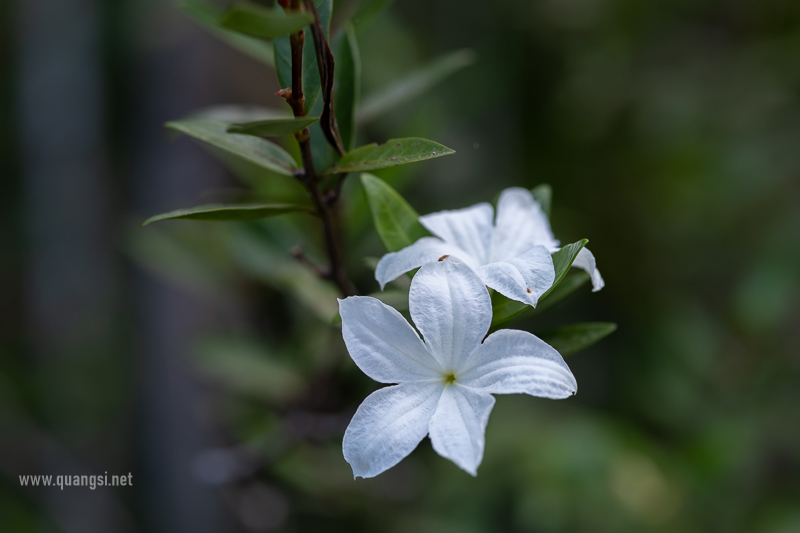
11. Didymocarpus phuquocensis – Sông Bế Đàn
One of the botanical highlights of the island, Didymocarpus phuquocensis is endemic to Phu Quoc, meaning it has been recorded only on the island.
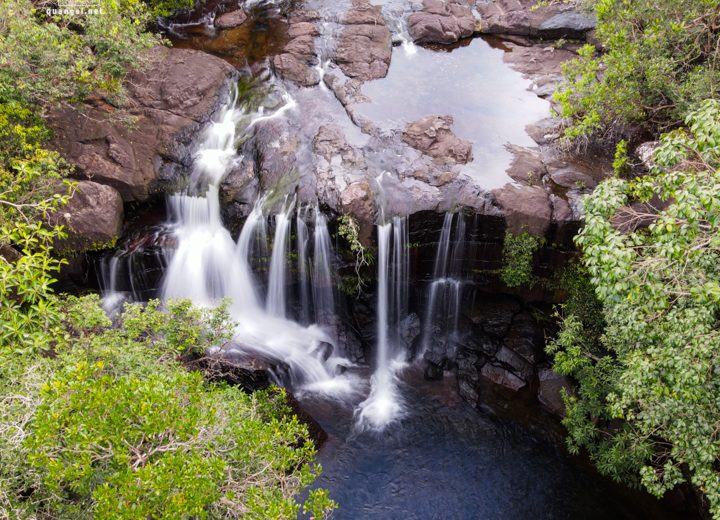
It grows on shaded granite cliffs and moist rocky slopes near waterfalls.
Because of its extremely limited distribution, this species is of great scientific interest and highlights the unique biodiversity of Phu Quoc National Park.
Didymocarpus phuquocensis – Sông Bế Đàn
12. Curcuma sparganifolia Gagnep – Nghệ Lá Hắc Tim Lang
A close relative of culinary turmeric, this attractive forest ginger produces striking pink flower bracts during the rainy season.
Its underground rhizomes have long been used in traditional herbal medicine.
Like many members of the ginger family, it plays an important ecological role by supporting insect pollinators.
Why Phu Quoc’s Flora Matters
The forests of Phu Quoc are far more than beautiful landscapes—they are living ecosystems that support thousands of species of plants and animals. Many flowering plants provide food for insects, birds, fruit bats, and mammals, while epiphytes such as orchids and ferns create microhabitats for frogs, spiders, and reptiles. Carnivorous plants thrive in nutrient-poor soils, and endemic species found nowhere else on Earth highlight the island’s global conservation value.
Protecting these forests means preserving an intricate web of life that has evolved over millions of years.
Experience Phu Quoc’s Botanical Wonders
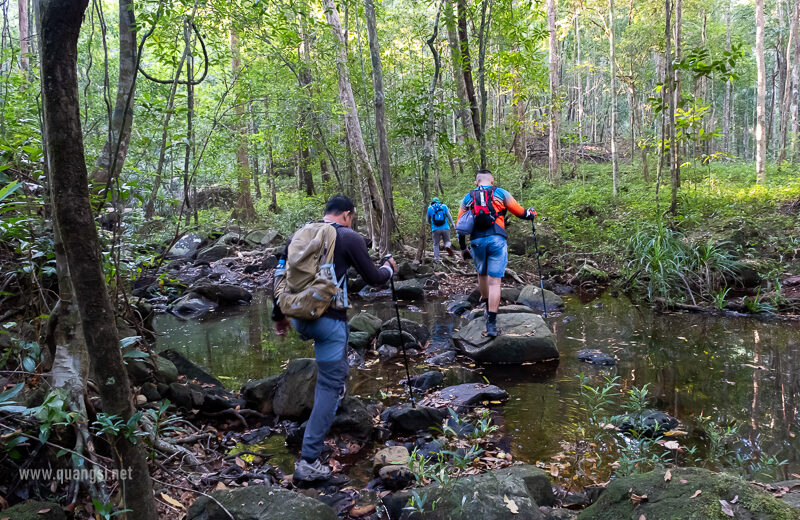
The best way to discover these remarkable plants is on a guided trek through Phu Quoc National Park. An experienced local guide can help you identify species that are easy to overlook while explaining their ecological roles, traditional uses, and fascinating adaptations.
Whether you’re interested in orchids, carnivorous plants, medicinal herbs, or endemic species, every hike offers new discoveries.
At Quang Si Nature Tours, we offer customized trekking experiences for nature lovers, photographers, researchers, and families. Our tours combine botany, wildlife watching, and rainforest exploration, giving you the opportunity to experience the incredible biodiversity that makes Phu Quoc one of Vietnam’s most important natural treasures.
Ready to explore the hidden flora of Phu Quoc? Contact us today and let us design a personalized botanical trekking adventure through one of Vietnam’s richest tropical rainforests.
Join us on a trekking tour to explore the hidden gems of Phu Quoc National Park, where you can encounter rare wildlife, admire stunning waterfalls, and enjoy the fresh air. You will also visit Rach Vem, a charming fishing village, where you can interact with the locals and taste their delicious seafood. Don’t miss this chance to discover the wild beauty of Phu Quoc island with us!